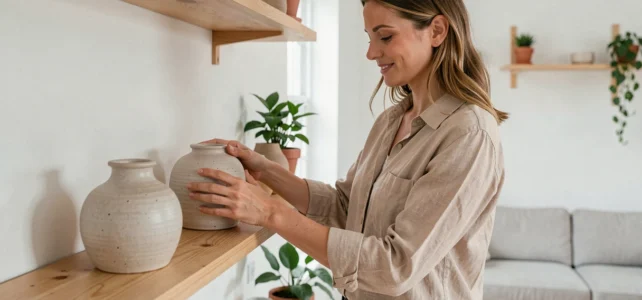
A wall repainted in sage green, a repositioned sofa, three new cushions, and yet the room still feels unfinished. The problem rarely lies in taste: we accumulate decorative elements without prioritizing the items that truly structure a space. Successfully equipping your decor starts with identifying the pieces that anchor the ambiance of a room before adding the finishing touches.
Materials and textures: the foundation that color alone cannot replace
We often start by choosing a color palette. It’s logical, but insufficient. Two living rooms painted in the same off-white can convey opposing atmospheres depending on the materials present: a raw wood tray and a boucle wool rug create a warmth that the same space furnished with smooth melamine and polyester will not replicate.
The current trend confirms this shift. Natural floors, unvarnished wood, crumpled linen, and artisanal ceramics are returning to interiors because they bring a tactile depth that industrial finishes do not offer. When choosing a piece of furniture or an accessory, touching the material before assessing its color remains the most reliable instinct.
Specifically, you can structure a living room around two or three dominant materials (wood, patinated metal, textured fabric) and stick to them. Adding a fourth material unrelated to the previous ones creates visual noise. Less variety in materials leads to more coherence in the space.
To explore ready-to-use combinations, the decor equipment at Deco Asaiss allows you to compare ranges where materials and finishes are already coordinated, simplifying the decision-making process.
Lighting and light sources: equipping each usage area
A central ceiling light illuminates a room. It does not enhance it. The difference between a flat interior and a lively one often lies in the number and position of light sources.
The most effective method is to divide the room into usage zones: reading nook, work surface, conversation area, passage. Each zone receives its own source. An adjustable reading lamp near the armchair, a low pendant above the dining table, indirect lighting behind a low piece of furniture for the back of the room.
- Low pendants (between 60 and 80 cm above a table) concentrate light and create a cocoon effect during meals.
- Table lamps with natural material shades (linen, rattan, paper) diffuse a soft light that softens contrasts in the evening.
- LED strips hidden under a shelf or behind a headboard add a layer of light without visually cluttering.
Multiplying light points costs less than a single designer light fixture, and the impact on the ambiance is greater. You also gain flexibility: each lighting scenario alters the perception of volume and colors.
Second-hand furniture and vintage pieces: an underestimated decor lever
The market for new furniture has been declining in France for several months, with a drop of more than two points in value in the first half of 2026. Meanwhile, a June 2026 study by Leboncoin Solutions Pro indicates that the majority of French people are open to buying second-hand furniture. This shift changes the way we build our decor equipment.
Finding a solid wood dresser from the 1960s or a second-hand rattan chair allows you to introduce materials and finishes that are no longer found in current production. Vintage furniture also brings immediate uniqueness: no one else will have exactly the same piece in their living room.

Practically speaking, be sure to check the sturdiness of the joints (drawers, legs, hinges) and budget for light restoration: sanding, wood oil, new fabric for a seat. A well-restored second-hand piece integrates better than a generic new piece.
Opinions vary on this point, but mixing one or two vintage pieces with contemporary furniture often yields a more personal result than a space entirely coordinated by a single catalog.
Textiles and decorative accessories: the finishes that transform a room
Textiles are the quickest category to change and produce the most visible effect relative to their cost. Changing curtains, cushion covers, or a throw can alter the palette of a room in an hour.
For a living room, work in layers:
- A rug that defines the conversation area and absorbs sound (preferably large enough for the front legs of the sofa to rest on it).
- Cushions in two or three different sizes, in shades that echo a secondary color from the wall or furniture.
- A throw or blanket in a contrasting material (thick wool on a linen sofa, textured cotton on leather) to break uniformity.
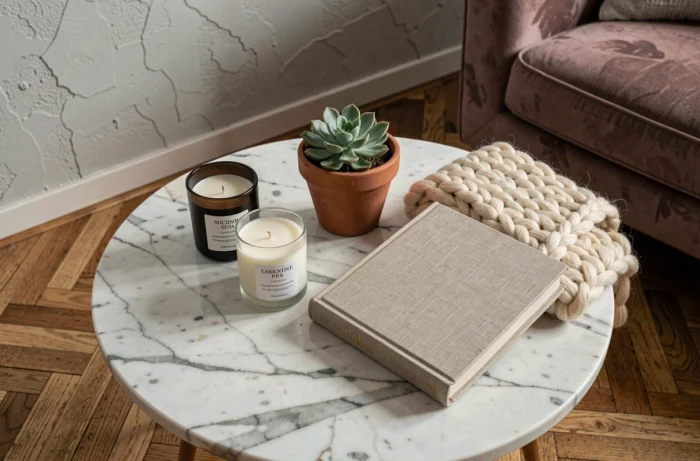
The classic trap is to multiply small decorative objects without a unifying theme. Three candles, two vases, a frame, a plant, a tray: taken individually, each element makes sense. Aligned on the same shelf without logic of proportion or color, they create visual clutter.
Grouping accessories in threes, varying heights, remains the simplest technique to compose a shelf or buffet without overloading.
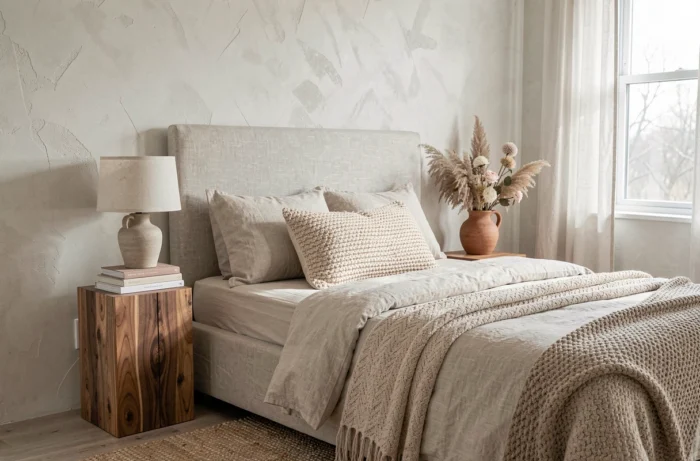
Transforming a space does not require replacing everything. Focusing the budget on materials, light, and a few well-chosen textiles produces a clearer change than accumulating objects. The rest is adjustment, not decoration.