
The transparency of real estate prices refers to the ability of any person to access the actual amounts of past transactions in a given area. In France, this transparency mainly relies on the DVF database (Demandes de valeurs foncières), made available as open data by the DGFiP via Etalab since 2019. Understanding what this data contains, its limitations, and how to exploit it radically changes the way to set a selling price or formulate a purchase offer.
DVF Database and Time Lag: What Displayed Prices Do Not Show
The DVF database records real estate transactions registered by notaries. It covers the sales of houses, apartments, and land across the entire territory. Each record mentions the price, area, type of property, and municipality.
The technical point to remember: the DVF database is updated only twice a year, in April and October. Between the signing of an authentic deed and its publication in public tools, the delay can reach several months, sometimes nearly a year. A buyer consulting this data in the summer is therefore working with prices that reflect the market of the previous year, not the current dynamics.
This structural lag creates an asymmetry. A seller well-informed about recent trends in their micro-market has an advantage over a buyer who relies solely on DVF consultation platforms. Conversely, a buyer who has identified this lag can challenge a selling price based on outdated references, for example, by using the papersimmo service on Immosphère to cross-reference DVF data with other market indicators.

Real Estate Prices and DPE: An Underestimated Negotiation Variable
The intersection of DVF data and energy performance diagnostics (DPE) reveals a significant price gap between properties based on their energy class. Properties classified F or G sell for significantly less per square meter than those classified A to D in the same municipality.
This differential is not trivial. With the gradual restrictions on renting out energy-inefficient properties, the DPE becomes a direct negotiation lever on the selling price. A buyer can substantiate their discount by showing the average gap between energy classes in the area, supported by DVF data.
For a seller, the logic is symmetrical. A recently renovated property in terms of energy, with a favorable DPE, justifies a higher pricing position, provided it can be documented with comparable transactions. Therefore, the transparency of real estate prices does not only encompass the gross amount: it includes the technical characteristics of the sold property.
Real Estate Estimation: The Limits of Automated Tools
Online estimation platforms calculate a price per square meter based on surrounding DVF transactions. The result provides a rough estimate, not a reliable value to the nearest euro. Several factors escape these algorithms:
- The actual condition of the property (recent renovation, aging installations, quality of materials) does not appear in the DVF database, which mentions neither photos nor technical descriptions.
- The conditions of the sale (inheritance, divorce, sale between relatives) influence the price without the database indicating it, which skews comparisons.
- The micro-location (floor, orientation, overlooking, proximity to nuisances) can vary the value by several tens of percent within the same building.
An automated estimate serves as a starting point, not a listing price. Comparing it with a field analysis, including a visit and knowledge of the local market, remains the only method to set a defensible price against an informed buyer.
Real Estate Sale: How to Use Transparency to Set Your Price
Setting a coherent selling price requires cross-referencing at least three sources. The first is the DVF database, to identify recent transactions of comparable properties in the same area. The second is the DPE of the property, to position the price relative to the average energy class in the area.
The third source, often overlooked, is the observed selling time in the local market. An area where properties sell within a few weeks can tolerate a price slightly above the latest DVF references. Conversely, an area where listings remain online for several months necessitates an immediate discount to avoid the effect of a “stale” property.
Real Estate Purchase: Using Public Data to Negotiate
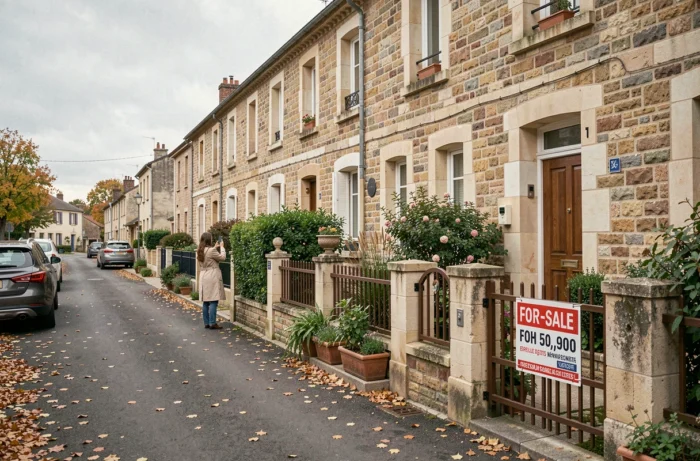
From the buyer’s side, the transparency of real estate prices offers a concrete negotiation tool. Before making an offer, consulting the DVF transactions in the neighborhood allows verification of whether the asking price corresponds to recent sales or deviates from them.
A price gap between the targeted property and comparable transactions alone is not sufficient for negotiation. One must be able to explain the difference: area, floor, general condition, DPE class. A well-supported offer with verifiable data is more likely to succeed than a simple “gut feeling” proposal.
Some elements to systematically check before making an offer:
- The price per square meter of the last three to five comparable sales in the same street or neighborhood, considering the type of property (apartment or house).
- The date of these transactions, to assess whether they still reflect the current trend or if the market has shifted since.
- The consistency between the asking price and the DPE class of the property, especially for properties classified E, F, or G where the discount is measurable.
Real Estate Listings and Displayed Prices: What Transparency Does Not Correct
Real estate listings display a listing price, not a transaction price. The gap between the two varies by market. In tight areas, the negotiation margin is small. In relaxed areas, it can be substantial.
The DVF transparency allows for measuring this gap by comparing displayed prices on listing portals with the prices actually paid in the area. This comparison, accessible to everyone, rebalances the relationship between seller and buyer.
The transparency of real estate prices has profoundly changed the balance of power in a transaction. The time lag of the DVF database remains its main weakness: the published data reflects the past, not the present market. Cross-referencing this information with the DPE, local selling time, and a concrete field analysis remains the most reliable way to sell at the right price or to buy without overpaying.