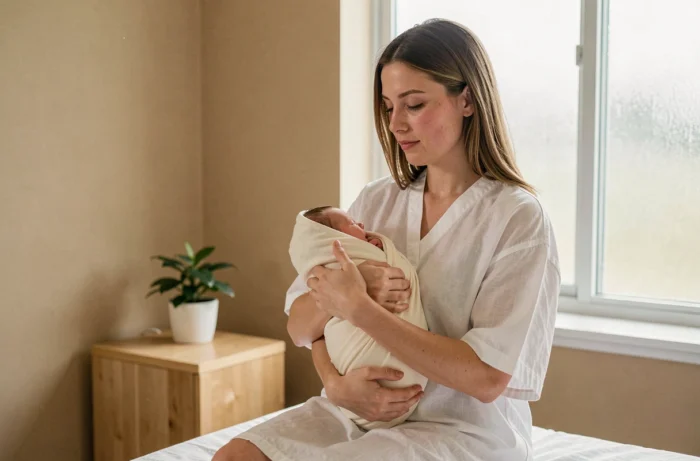
Birth preparation in France has changed significantly in recent years. The focus is no longer solely on pain management or room arrangements, but on a comprehensive support system that integrates the mental health of both parents from pregnancy onward. To experience a magical birth and welcome the baby serenely, it is essential to first understand the recent frameworks and the concrete choices that make a difference on the big day and in the weeks that follow.
Early Prenatal Interview: A Game-Changing Appointment
The early prenatal interview (EPI) is offered starting from the fourth month of pregnancy. Since its generalization, it has become the first space where expectant parents can discuss their fears, medical history, and expectations regarding childbirth with a healthcare professional trained in perinatal listening.
This appointment does not replace childbirth preparation sessions. It precedes and guides them. A woman who expresses significant anxiety may be directed to sessions of perinatal hypnosis or sophrology, while another, feeling more at ease, may prefer a traditional preparation focused on breathing and postures.
Expectant parents who wish to explore different approaches to prepare for a magical birth on My Magical Baby find additional resources beyond medical consultations, allowing them to construct a birth plan that aligns with their actual needs.
The co-parent can participate in this interview. This inclusion is not trivial: the co-parent is recognized as at risk of psychological distress when supporting a partner in difficulty. Establishing the foundations for dialogue as early as the fourth month reduces the risk of emotional disconnection after the birth.
Parenting Pathway 2026 and Postpartum Screening
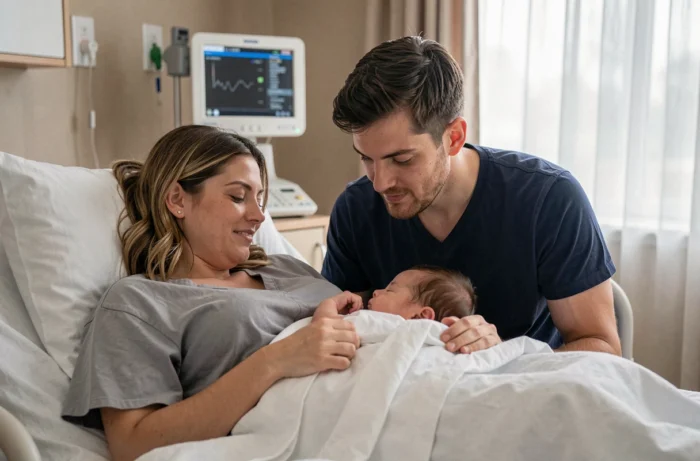
Since 2022, the early postnatal interview (EPNI) has become mandatory. It is offered between the fourth and eighth weeks after birth to screen for postpartum depression and early anxiety disorders.
The Parenting Pathway 2026 goes further. It allows for a second interview between the tenth and fourteenth weeks when risk factors are identified: birth trauma, social isolation, psychiatric history. This additional safety net reflects a change in perspective.
Welcoming the baby serenely is no longer limited to getting good sleep or organizing a visiting schedule. Health authorities now view the postpartum period as a long-term emotional journey, not just a moment to get through gritting one’s teeth.
What the EPNI Evaluates Specifically
- The mother’s emotional state: sleep, crying, feelings of disconnection with the baby, intrusive thoughts
- The dynamics of the couple or support network: presence of effective daily support, quality of communication with the co-parent
- The associated physical signals: persistent pain, unresolved breastfeeding difficulties, disproportionate fatigue compared to the context
Field reports vary on the actual accessibility of this second interview depending on the regions. In some areas lacking perinatal professionals, the waiting time exceeds the expected timeframe. The measure exists, but its implementation remains uneven.
Childbirth Preparation: Choosing a Method Suited to One’s Profile
Traditional childbirth preparation sessions, reimbursed by health insurance, cover the physiology of birth, pain management, and initial care with the newborn. They remain the foundation for most expectant mothers.
However, several complementary methods are gaining ground, although their effectiveness is not always uniformly documented.
Perinatal Hypnosis and Sophrology
Perinatal hypnosis works on pain perception and confidence in one’s bodily abilities. The sessions teach how to enter a deep relaxation state that can be accessed during labor. Sophrology, similar in its logic, emphasizes positive visualization and controlled breathing.
These approaches do not guarantee a pain-free delivery. They provide stress management tools that, depending on the profiles, may reduce the need for certain medical interventions. The available data do not allow for a clear conclusion regarding the superiority of one method over another.
What Matters in the Choice
- The relationship with the practitioner: midwife, hypnotherapist, or sophrologist, the quality of listening takes precedence over technique
- The starting time: beginning in the third trimester allows enough time to integrate the exercises without pressure
- Compatibility with the birth plan: a woman considering an early epidural has different needs than one wishing for a physiological birth
- The budget: complementary sessions are rarely fully covered, expect to pay between a few dozen and a hundred euros per session depending on the professional
Postpartum at Home: The First Days Unfiltered
Leaving the maternity ward often occurs after a few days. This return home represents a shift that prenatal preparation only partially covers. The gap between the image of a gentle postpartum and the reality of fragmented nights destabilizes even the most informed parents.
Breastfeeding crystallizes a significant portion of the stress in the first weeks. Difficulties with latching, cracked nipples, and doubts about milk supply are not a matter of willpower. They require technical support from a midwife or lactation consultant, ideally in the first few days.
The PRADO program (homecoming program) allows for a midwife visit at home as early as the day after discharge. This system has existed for several years, but many new parents are unaware that they can benefit from it without any special procedures: the maternity ward transmits the file.
The issue of self-confidence as a parent cannot be resolved with a checklist of supplies. It is built day by day, accepting that the first weeks may be chaotic and mobilizing available resources, whether it be a postnatal interview, a support group for mothers, or simply a friend who takes over for a few hours.
The journey to a serene birth does not stop in the delivery room. It continues well beyond, in a daily life where each parent learns their role without a fixed manual.