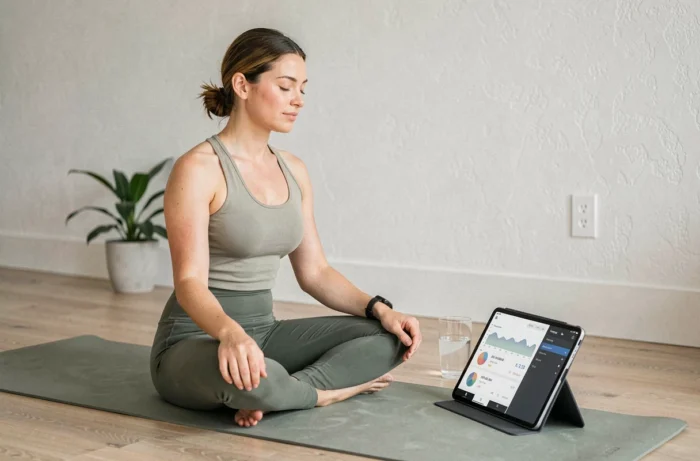
Health innovations are no longer limited to research laboratories or large hospital centers. Wearable sensors, algorithms for analyzing medical data, restructured prevention programs in companies: these advancements are changing the way everyone monitors, understands, and preserves their health on a daily basis. The scope ranges from AI-assisted diagnosis to connected wellness devices, including precision medicine models that target treatments on a patient-by-patient basis.
Wellness in France: a market reshaping after the post-Covid boom
Before discussing technologies, a look at the economic reality of the sector is necessary. The French market for wellness equipment (spas, saunas, balneotherapy) saw a significant increase between 2020 and 2022, driven by a retreat to the home. A sharp correction followed until 2024.
According to a MSI Reports study reported in August 2026, the market stabilizes in 2025 and is expected to remain stable in 2026-2027, before a gradual return to growth driven by the high-end segment and the tourism sector. This trajectory directly influences the adoption of wellness innovations by the general public: manufacturers are now focusing on connected and customizable equipment rather than volume.
Wellness practitioners (osteopaths, sophrologists, naturopaths) are also being consulted more, reflecting a demand for individualized follow-up that digital tools complement. Resources like lasantedemain.com allow tracking these developments at the intersection of health and digital technology.
Artificial intelligence and medical diagnosis: what data analysis changes
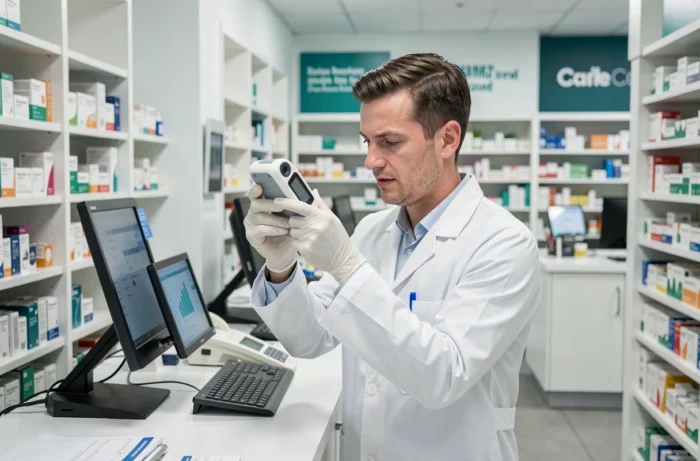
Artificial intelligence applied to diagnosis forms the technical foundation of most recent health innovations. The principle relies on training algorithms using vast datasets (imaging, biological results, patient records) to identify patterns that the human eye detects more slowly or less consistently.
In medical imaging, software is already assisting radiologists in reading scans and MRIs. AI does not replace the practitioner, but filters, prioritizes, and flags anomalies, reducing the time between examination and interpretation. The Fondation de l’Avenir identifies imaging and artificial intelligence among the major axes of applied medical research.
Predictive algorithms and decision support
Beyond imaging, predictive algorithms analyze longitudinal data (tracking a patient over several years) to estimate the risk of pathology. In oncology, this approach combines with the study of biomarkers, biological indicators that allow treatment to be tailored to the molecular characteristics of a tumor.
Liquid biopsy, for example, analyzes fragments of circulating tumor DNA in the blood. This type of examination, less invasive than a traditional biopsy, paves the way for more frequent monitoring of cancer progression and rapid therapeutic adjustments.
Connected devices and prevention: reliability and limits of everyday sensors
Watches, rings, sleep bands: consumer connected devices now measure heart rate, oxygen saturation, sleep quality, or physical activity levels. Their main interest lies in the continuous collection of health data outside the medical office.
This constant collection has a downside. Studies reported by specialized sites highlight a recurring issue: sleep trackers, in particular, show significant discrepancies compared to polysomnography (the reference laboratory examination). Reliability varies by brand and sensors used.
- Wrist optical sensors accurately measure resting heart rate but lose precision during exertion or with nighttime movement.
- Sleep data (deep phases, REM phases) remain approximate and should not serve as a basis for self-medication.
- Certified medical devices (classes IIa or IIb) offer superior reliability to consumer gadgets, but their cost and ergonomics limit their dissemination.
The European regulatory framework, particularly with the gradual implementation of the artificial intelligence regulation, imposes transparency obligations on manufacturers regarding the algorithms embedded in these devices. The CNIL has published its initial responses on the subject.
Wellness programs in companies: the shift towards measurable prevention
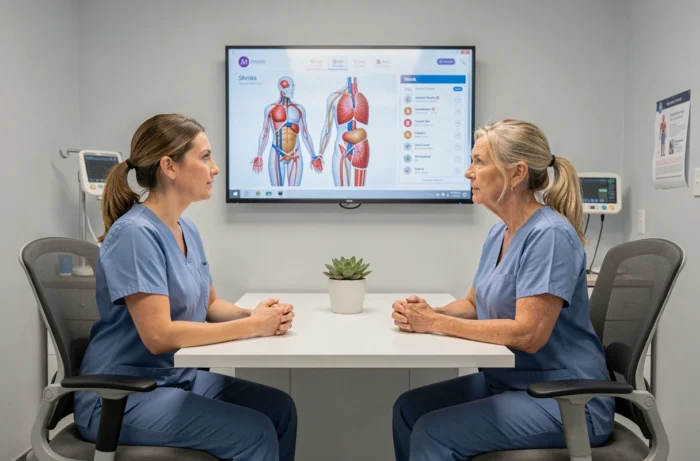
Health innovations are not only about the individual facing their doctor or their connected bracelet. The workplace is becoming a concrete application ground. The WTW 2026 Well-Being Barometer, covering organizations representing 564,000 employees in France, reveals that 83% of employers plan to evolve their wellness programs.
The direction taken is not about stacking options (yoga classes, gym memberships, meditation apps). Companies are looking to structure prevention programs whose results can be measured: reducing absenteeism, improving reported health indicators, decreasing musculoskeletal disorders.
From benefits catalog to data management
This change involves a more rigorous management of health data at work. Employers are cross-referencing anonymized data on program usage with HR indicators to identify truly effective actions. The trend marks a shift from wellness perceived as a social benefit to prevention designed as a measurable investment.
Practitioners of complementary medicine (osteopathy, sophrology) are increasingly integrated into these programs, alongside digital tools. The 2026 barometer of wellness practitioners confirms an increase in consultations, partly driven by agreements between companies and networks of therapists.
- Programs focused on preventing musculoskeletal disorders, the leading cause of sick leave.
- Stress tracking applications validated by clinical protocols, not just by user feedback.
- Partnerships between mutual insurance companies and telehealth platforms to facilitate access to consultations.
The challenge for the coming years for health and daily wellness lies less in the emergence of new technologies than in their reasoned adoption. Reliability of sensors, transparency of algorithms, measurability of prevention programs: these three criteria will determine which innovations move from prototype to everyday use.