The car fleet in Metz is aging, and with it, the dull bodywork, the dust-filled interiors, and the time-worn upholstery. Professional cleaning is not just a quick rinse with a hose in the supermarket parking lot. It involves techniques, products, and a regulatory framework that most drivers underestimate.
Car Wash Regulations in Metz: What the Law Really Requires
Washing your car in front of your home may seem harmless. The legal framework says otherwise. The departmental health regulations, adopted by nearly all French municipalities, prohibit vehicle washing on public roads: open parking lots, streets, sidewalks. Offenders face fines of up to 450 euros.
This ban is not only about urban cleanliness. Wash water contains hydrocarbons, brake pad residues, and surfactants that flow directly into stormwater systems without treatment. In Metz, where the Moselle and Seille rivers run through the city, the issue of pollutant discharges is monitored.
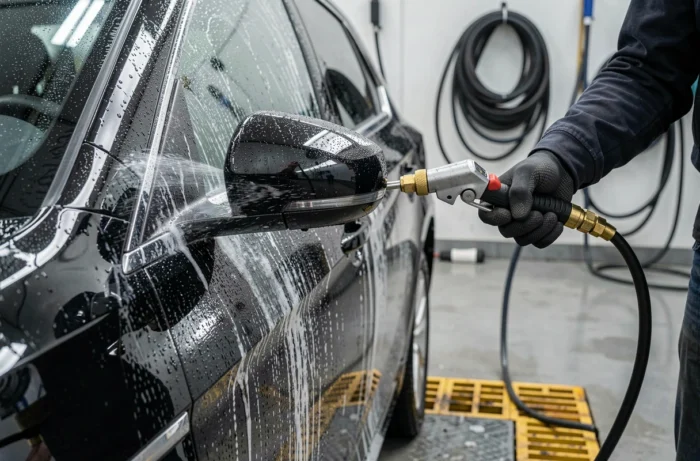
Periods of drought add another layer of constraints. Prefectural orders systematically prohibit washing at private homes as soon as the first levels of restriction are enacted. Professional stations, however, remain authorized as long as they use high pressure or a recycling system that recycles at least 70% of the water. This is a structural advantage for equipped centers, allowing them to continue operating even during heatwaves.
A professional car cleaner in Metz like cleanauto-metz.com operates within this regulatory framework, with facilities compliant with discharge and water consumption standards.
Professional Interior Cleaning: Beyond the Vacuum Cleaner
The interior of a vehicle accumulates much more than dust. Allergens, bacteria, food residues, mold in the ventilation ducts: a household vacuum only addresses the visible surface. Professional cleaning of the cabin relies on distinct steps targeting each material.
Fabric Upholstery and Leather Upholstery: Two Different Protocols
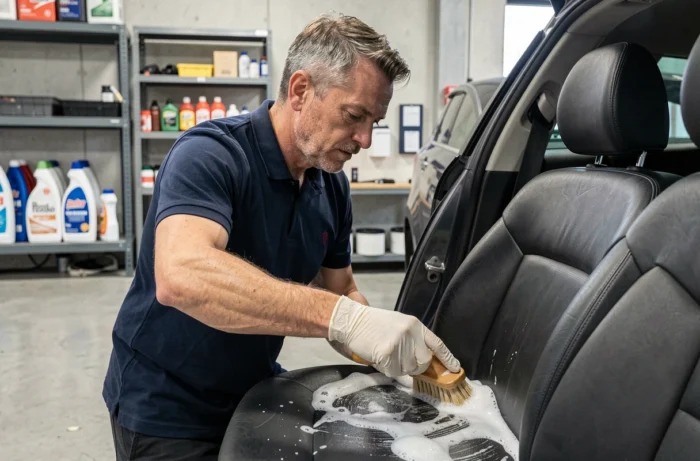
A fabric seat requires an injection-extraction process: water mixed with a specific detergent is injected into the fiber, then extracted along with the dirt. Leather, on the other hand, requires neutral pH cleaning followed by a nourishing cream to prevent drying and cracking.
The plastics of the dashboard, door seals, and ventilation grilles each receive tailored treatment. A professional distinguishes these surfaces because an inappropriate product can discolor plastic or leave a greasy film on a touchscreen.
- Injection-extraction for seats and carpets, with controlled drying time to prevent mold
- Steam cleaning of ventilation ducts, which eliminates bacteria without aggressive chemicals
- Odor treatment through ozonation, useful after a smoker’s vehicle or an incident (spilled milk, sick animal)
A complete interior cleaning generally takes several hours. Working time is the first indicator of a service provider’s seriousness. A service rushed in forty minutes cannot cover all these steps.
Bodywork Protection in Metz: Wax, Ceramic, or Film
Professional exterior cleaning does not stop at shampooing. The subsequent protection phase determines the durability of the result. Three options stand out, with very different lifespans and costs.
Ceramic Treatment: Long-Lasting Protection
Ceramic treatment deposits a nanometric layer of silica on the paint. This layer creates a pronounced hydrophobic effect: water beads up and carries away light dirt. Ceramic protection lasts significantly longer than traditional wax, often several years compared to a few weeks for conventional wax.
However, the application requires prior decontamination of the bodywork (clay bar, corrective polish) and a controlled environment. An unheated garage or application in full sunlight compromises the product’s adhesion. Field reports vary on actual durability depending on local climatic conditions, but the principle remains reliable when the preparation is thorough.
Natural Wax and Protective Film: The Alternatives
Carnauba wax offers a warm, deep finish, favored on classic vehicles. Its protection is shorter, but it is easy to reapply. The protective film (PPF), on the other hand, physically protects against stone impacts and micro-scratches. Its cost is significantly higher, and it is mainly aimed at new or high-end vehicles.
- Natural wax: immediate shiny finish, protection lasting a few weeks, easy reapplication
- Ceramic treatment: long-lasting protection, hydrophobic effect, demanding technical application
- PPF: physical barrier against impacts, high cost, applied to exposed areas (hood, bumpers, mirrors)
Auto Detailing in Metz: Distinguishing Corrective Polishing from Simple Buffing
The term “detailing” encompasses very variable services from one center to another. The fundamental difference lies between cosmetic buffing and corrective polishing.
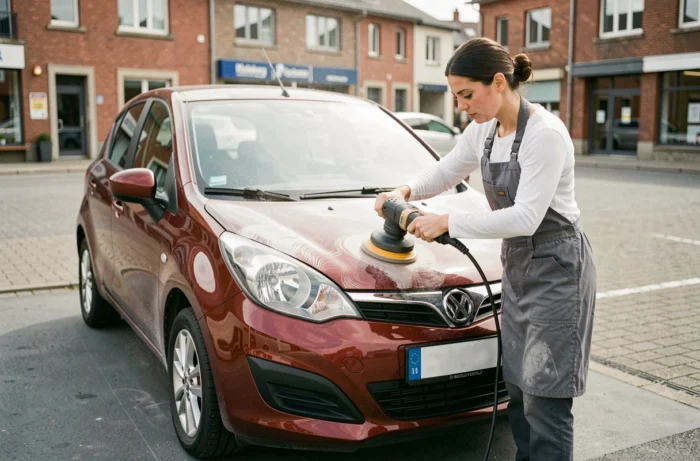
Buffing applies a product that temporarily fills in micro-scratches. The visual effect is immediate but disappears after the first wash. Corrective polishing, on the other hand, removes a thin layer of clear coat to permanently eliminate defects. It requires an orbital polisher, pads of varying densities, and precise measurement of the remaining clear coat thickness.
A clear coat that is too thin cannot withstand aggressive polishing. A professional measures this thickness before intervening, which prevents piercing the clear coat and exposing the raw paint. This diagnostic step separates serious detailing from a mere surface polish.
Corrective polishing logically precedes the application of a ceramic treatment. Applying protection over a scratched clear coat means freezing defects under a transparent layer. The order of operations influences the final result as much as the quality of the products used.
Choosing a professional cleaning center in Metz involves balancing the desired service level with the available budget. A basic exterior wash and a complete detailing with clear coat correction and ceramic application have different prices, objectives, and lifespans. The only constant remains the regulatory framework: whatever the formula, it must comply with the discharge and water consumption standards in effect in Moselle.