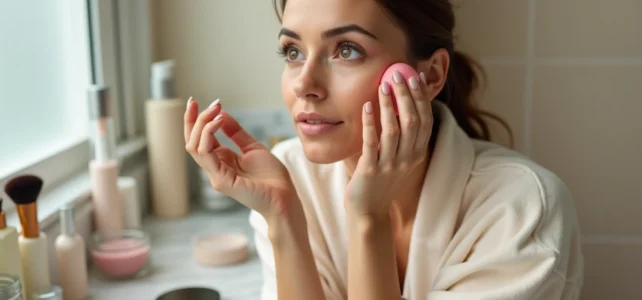
We’ve all experienced that moment in the store: testing three shades on the jawline, hesitating between two textures, leaving with a foundation that seems perfect in the shop but turns into a mask in natural light. Full coverage foundation remains the most challenging makeup product to choose because it combines three variables: texture, shade, and compatibility with skin type.
Rather than listing dozens of references, we focus here on the concrete criteria that make a difference in everyday use.
Photo flashback: the trap of mineral filters in full coverage foundation
When looking for high coverage foundation, we often come across formulas enriched with titanium dioxide or zinc oxide. These mineral filters are suitable for sensitive skin, but they cause a well-known undesirable effect among professional makeup artists: flashback, that white glow in flash photos.
The phenomenon arises from the reflection of light on mineral particles. In an indoor selfie or at an event, the face appears whitish, disconnected from the rest of the body. For this reason, professionals prefer formulas with chemical filters or without SPF when the makeup is intended for a shoot or an evening out.
If you’re looking to identify the best full coverage foundation for versatile use, the composition deserves careful attention before the shade. Check the INCI list: when “titanium dioxide” or “zinc oxide” are among the first five ingredients, the risk of flashback is real.
A full coverage foundation with SPF does not replace dedicated sunscreen for prolonged exposure. Dermatologists recommend applying sunscreen under makeup rather than relying on the SPF in foundation, as the amount applied is rarely sufficient for effective protection.
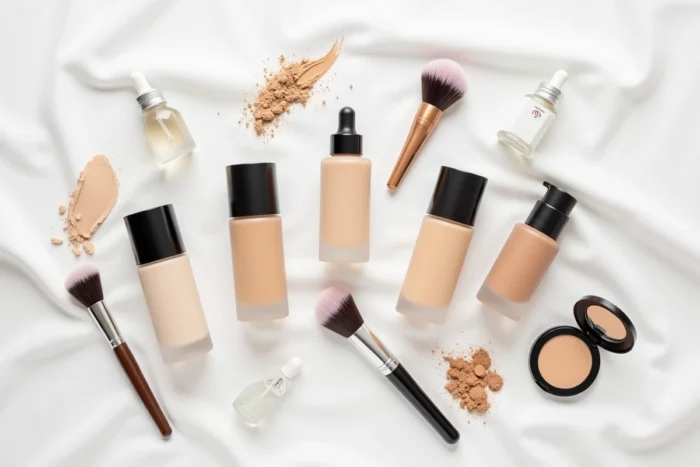
Foundation texture and skin type: three concrete cases
Classic beauty guides categorize textures by skin type with well-organized tables. In practice, it’s more nuanced, as skin changes with the season, stress, and environment. We start from three common situations to clarify things.
Oily skin with visible imperfections
On skin that shines by midday, a matte fluid foundation with high coverage holds better than a compact formula. The compact tends to slide on sebum and create clumps in the T-zone. We look for a fluid, long-lasting texture and set it with a translucent loose powder.
A mattifying primer changes the wear for at least half a day on oily skin. Without this step, even a high-performing foundation eventually migrates.
Dry skin that shows fine lines
Achieving maximum coverage on dry skin is a balancing act. Highly pigmented formulas tend to settle into fine lines and accentuate dehydration. We prefer a cream foundation or a covering stick, applied in small areas with a damp sponge.
Moisturizing the skin twenty minutes before application makes a real difference. The foundation merges better with supple skin than with a tight surface.
Sensitive or eczema-prone skin
Reactive skin does not tolerate highly covering formulas loaded with fragrance or harsh preservatives well. We turn to foundations formulated without alcohol, without fragrance, with short INCI lists. Feedback varies on this point, as tolerance depends greatly on each individual’s skin, but a simple rule applies: the fewer ingredients in the formula, the lower the risk of reaction.
Cyclosiloxanes and reformulation: what’s changing in foundation compositions
Fans of “second skin” textures are familiar with that silky sensation to the touch. It often comes from volatile cyclosiloxanes (D4, D5, D6), texture agents widely used in cosmetics. European regulations now govern these substances, leading to concrete changes in formulations.
D4 is listed as a banned substance in cosmetics. D4 and D5 are limited to less than 0.1% in rinse-off products since January 2020. These restrictions are pushing brands to reformulate their full coverage foundations, which explains why some textures have evolved in recent years.
For us consumers, this translates into formulas that sometimes change in texture without warning. A foundation we loved three years ago may have been reformulated. When repurchasing a covering product, it’s better to test it again rather than assume the texture remains the same.
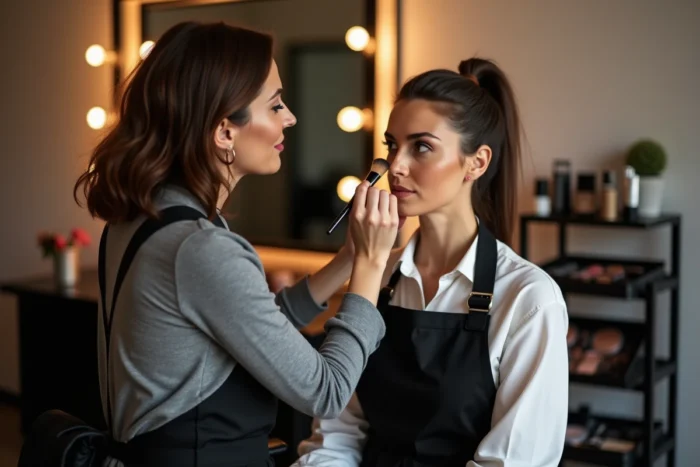
Application and wear: the techniques that prevent a mask effect on the face
Poorly applied full coverage foundation results in a worse outcome than bare skin. Coverage should not be layered thickly: we build the result gradually.
- Apply a thin first layer over the entire face with a damp sponge, tapping (not stretching), to create an even base without overload
- Add product only to the areas that need it: dark circles, redness, acne scars, pressing the sponge or brush rather than rubbing
- Set with a minimal amount of loose powder, concentrated on the T-zone, to avoid mattifying areas that don’t need it and dulling the complexion
- Spray a setting spray at the end of the routine to meld the layers together and extend wear
Building coverage with thin layers gives a natural result where a single thick layer creates a plaster effect. It takes a few extra minutes, but the finish on the face is incomparable.
The choice of application tool
A flat brush provides a more covering finish than a sponge, but it sometimes leaves visible brush strokes. The damp sponge absorbs a bit of product (so we use slightly more) but it melds the material into the skin. For a natural makeup look despite high coverage, the damp sponge remains the most reliable tool.
The last detail we often forget: check the result in natural light, near a window, before heading out. The artificial lighting in the bathroom is rarely representative of what the complexion will look like outside. This check takes ten seconds and avoids unpleasant surprises.