
When searching for a hyaluronic acid serum on a Sunday evening, the question isn’t about finding a cosmetics website. It’s about finding one that doesn’t drown the product under hundreds of unfiltered references.
Online beauty shopping has structured itself over the past few years around very different platforms: some focus on strict curation, others on volume, and still others on transparency of compositions. Knowing where to buy depends less on price than on what you actually expect from the site.
Online cosmetics composition: what the product sheet doesn’t always show
On most major retailers, the INCI list is present. You can find it at the bottom of the page, sometimes in a secondary tab that needs to be expanded.
The real issue is readability. A site that displays the raw list without explanation does not provide the same service as a platform that identifies the main active ingredients, highlights common allergens, or specifies the origin of the ingredients. Specialized shops in organic or clean beauty cosmetics often have a head start on this point because ingredient transparency is part of their business model.
The European EmpCo directive, which now regulates environmental claims, reinforces this requirement: sustainability labels displayed on a commercial site must be backed by identifiable certification or public authority. A “green” badge without a verifiable organization behind it no longer holds regulatory value. You can therefore discover the Top Beauté shop to explore a selection that highlights brands attentive to these transparency criteria.
Before confirming a cart, check three things on the product sheet:
- The complete INCI list is accessible without leaving the page, not hidden in a PDF or external link
- The mentions “organic,” “natural,” or “clean” refer to a specific standard (Cosmos, Ecocert, Natrue) and not to a self-declaration by the brand
- The percentage of natural origin ingredients is indicated when the product claims a green formulation
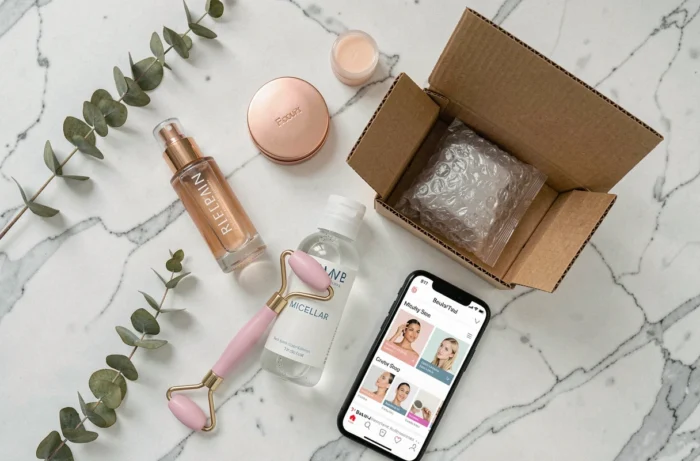
Curation selection or giant catalog: which type of beauty site to choose
Today, we distinguish two main families of sites for buying beauty products online. The first includes marketplaces with a wide catalog, which list several hundred brands of makeup, skincare, and perfumes. The second gathers e-shops with a limited selection, which choose each reference based on formulation, ethics, or niche criteria.
A wide catalog is suitable when you already know what you want. You type in the reference, compare prices, and order. The time-saving is real. To discover new brands or refine a routine, the abundance of choices often has the opposite effect: you scroll, hesitate, and abandon the cart.
Curation shops operate in the opposite way. Each product has been tested or validated by an editorial team. The number of references is limited, but each sheet is documented. This model particularly attracts buyers of facial care and certified organic cosmetics, where the need for reassurance about ingredient quality is stronger than for a classic lipstick.
When live shopping changes the game
Some brands are now integrating live shopping sessions, with live product demonstrations and the possibility to purchase during the stream. Sephora, Benefit, or Marionnaud use this format for their launches. The concrete benefit: you see the texture, coverage, and finish on real skin before buying. Live shopping reduces uncertainty about shades and textures, two common reasons for returns in online cosmetics.
AI recommendations and personalization: an increasing purchasing criterion
Personalization on beauty sites is no longer limited to “skin type” or “concern” filters. According to data relayed by Criteo, a significant share of French consumers already uses an AI assistant for at least one step of their beauty purchases. Skin diagnosis, routine suggestions, active ingredient comparisons: these tools directly influence the decision.
In practice, sites that offer a skin quiz followed by targeted recommendations show higher conversion rates than those that rely solely on a traditional search engine. For buyers, this means that a good online beauty site is no longer judged only by its catalog or prices, but also by its ability to filter out the noise.
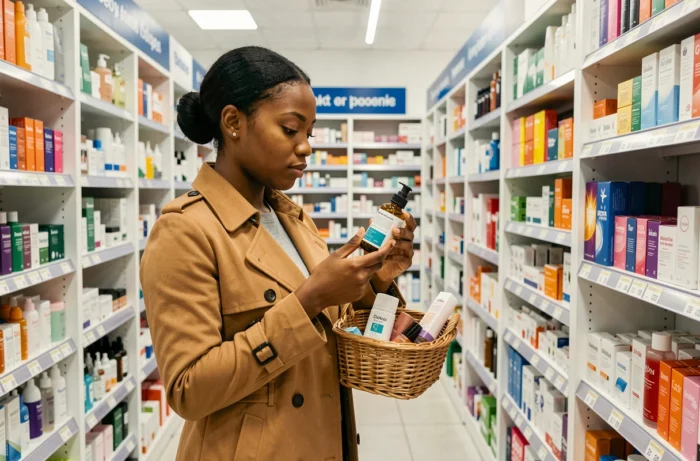
Feedback varies on the reliability of these automated diagnostics, and not all are equal. A five-question quiz will never replace a dermatologist. But to guide an initial selection of skincare or makeup, it’s a useful filter, especially when starting a new routine.
Online beauty trends: rising perfumery, declining nails
Search data compiled by Spate and relayed by Expression Cosmétique paints a precise picture for this year. Perfumery and sun protection are among the most dynamic segments, while makeup stabilizes. Hair care is slowing down, and the nail segment is clearly declining.
For a buyer looking to invest wisely, this directs the choice of site. Platforms specialized in niche perfumery or certified sun care often offer better product sheets and samples in these growing categories. Conversely, for nail polish or nail art, generalist marketplaces remain more competitive on prices.
Beauty e-commerce in numbers
Fevad indicates that e-commerce in France grew by 6.6% in the first half of 2026. Beauty is fully benefiting from this dynamic, driven by the sale of skincare products and perfumes. This context pushes sites to improve their services: fast delivery, flexible return policy, free samples.
Choosing an online beauty product site ultimately comes down to three trade-offs: transparency of composition, quality of curation, and relevance of recommendation tools. Price matters, but it is no longer the only lever. A site that helps you understand what you are buying is often worth more than a site that sells everything cheaper without explanation.