The renovation of a house relies on a sequence of technical decisions whose order determines the final result. Before choosing a paint color or a flooring material, one must know which technical lots to engage, in what sequencing, and with what level of coordination. This initial framing separates projects that succeed from those that go over budget and schedule.
Priority technical lots before finishing
A common mistake is to treat renovation work as a checklist without hierarchy. However, the logic of the project imposes a strict order: hidden networks always come before visible surfaces.
Electricity and plumbing are the first two lots to address. Bringing the electrical panel up to code or replacing outdated pipes requires cutting into walls and flooring. Carrying out these interventions after laying new tiles means everything has to be torn up.
Next comes insulation, which changes the thickness of walls and thus the dimensions of each room. Installing windows or custom furniture before insulating the walls means working with incorrect dimensions. Heating is sized after insulation, not before, because thermal needs change radically once heat loss is reduced.
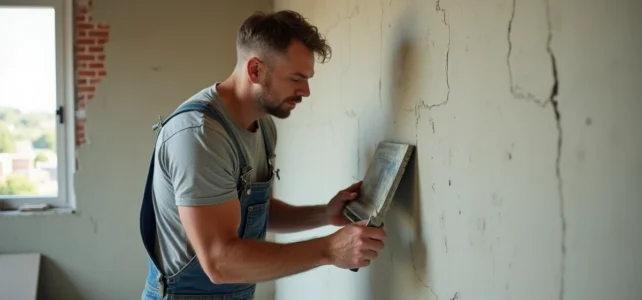
In the renovation of an old house, a lot that is often underestimated appears: structural repair. Foundations, cracked lintels, weakened frameworks. These issues must be identified through a prior diagnosis and addressed before any finishing work.
To delve deeper into these technical issues and compare approaches, the site tout-immo.net for your renovation work details the various stages by trade.

Renovation budget: structure the scope rather than set a global amount
Announcing a total budget without breaking it down by technical lot leads straight to a dead end. Recent content on renovation distinguishes three levels of intervention (light, intermediate, complete) to avoid overly vague estimates.
Compare quotes on identical bases
Comparing quotes only makes sense if each contractor quotes exactly the same scope. A plumbing quote that includes the supply of sanitary fixtures and another that only covers labor are not comparable, even if the latter seems cheaper.
- Detail each item by lot (demolition, supply, installation, finishing) to compare line by line
- Check that the specified materials are of equivalent quality from one quote to another
- Confirm that the stated timelines cover the same project period, including breaks
The contingency margin, a non-negotiable item
Planning a margin of ten to fifteen percent of the total budget is a project reflex, not an excess of caution. In renovation, surprises appear as early as the demolition phase: non-compliant wiring behind a wall, moisture in a floor, asbestos in a false ceiling.
This margin is calculated on the total amount and remains protected. It is not used to finance a change in tile quality midway through the project.
Project coordination: the threshold where a project manager becomes cost-effective
Managing two or three contractors on a partial renovation is feasible. Coordinating five to eight trades on a complete renovation is another profession.
The project manager or architect manages the sequencing, the interfaces between lots, and quality control. Their involvement represents a cost, but it prevents rework due to poor sequencing (the drywall installer coming in before the electrician, for example).
Several recent sources confirm that the operational complexity of a renovation project is better recognized than it was a few years ago. Beyond a certain budget threshold, hiring a coordination professional becomes a recurring recommendation.

What the coordinator checks on your behalf
- Compliance with the schedule by each participant, with adjustments in case of delays from a lot
- Conformity of the materials delivered compared to the signed quotes
- Technical reservations to be lifted before moving to the next lot (waterproofing, plumb, levels)
- Local regulatory constraints, especially for houses located in protected areas
On an energy renovation project, the coordinator also ensures coherence between insulation, ventilation, and heating. A poorly sized ventilation system after enhanced insulation creates condensation problems, which degrades the building instead of improving it.
Renovation materials: balancing performance and durability
The choice of materials is not limited to aesthetic criteria. In renovation, each material interacts with the existing structure, and this technical compatibility determines the longevity of the result.
A lime plaster on an old stone wall works because it allows water vapor to migrate. A cement plaster on the same wall blocks this migration and causes rising damp. The compatibility between new materials and old supports determines the durability of the project.
For insulation, the same reasoning applies. A high-performance synthetic insulation on a new construction may pose problems on an old structure whose walls need to breathe. Bio-based insulations (wood fiber, hemp) offer better hygrothermal performance in this case.
For finishes, the quality of the material is measured by usage. A low-cost tile laid in a high-traffic entryway deteriorates within a few years. Investing in materials for high-traffic areas reduces replacement costs in the long term.
The last often overlooked point concerns the development tax and administrative constraints that accompany certain renovation works. A facade modification, a change of use, or even a modest extension can trigger reporting obligations. Checking the local regulatory framework before ordering materials avoids unpleasant surprises at the end of the project.