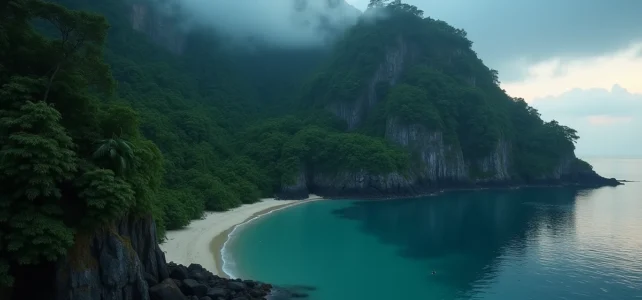
The island of Mako immediately evokes mermaids, a volcanic crater, and a moon pool with supernatural powers. Millions of viewers grew up with the series H2O and Mako Mermaids, to the point of wondering if this island exists somewhere on a map. The short answer can be summed up in one sentence: the island of Mako is a pure fictional invention, created by producer Jonathan M. Shiff based on real Australian landscapes.
Mako and Sandy Island: when fiction meets cartographic error
You may have seen videos or posts claiming to have located the island of Mako on Google Maps. These viral contents perpetuate confusion, but no island by that name appears on official Queensland surveys or Australian maritime navigation charts.
The parallel with Sandy Island helps to understand why doubt persists. Sandy Island appeared on maps of the South Pacific for decades, including those of Google Maps, before being officially recognized as a cartographic error in 2012. Australian researchers navigated to the indicated coordinates and found only ocean.
The difference between the two cases is clear. Sandy Island was a scientific error, Mako is a recognized fiction. The volcanic crater, the Moon Pool fed by the full moon, the transformation powers upon contact with water: none of this has geological or geographical basis. Jonathan M. Shiff drew inspiration from the Australian Gold Coast and Pacific islands to create a credible setting, never claiming it was a real place.
For those who want to dig deeper into the question, it is still possible to discover if the island of Mako really exists by exploring detailed analyses of the series’ mythology.
Real filming locations on the Australian Gold Coast
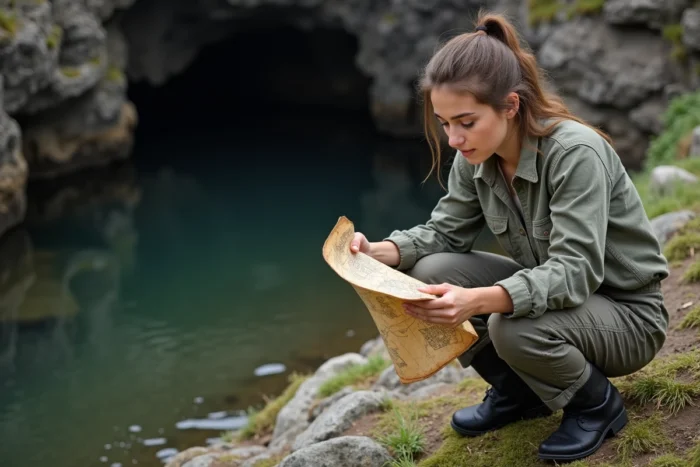
If Mako doesn’t exist, the landscapes that inspired it are very tangible. The filming of the series H2O and Mako Mermaids mainly took place on the Gold Coast in Queensland. Beaches, coastal cliffs, and some inland bodies of water served as backdrops.
The outdoor sets mix several real sites without any of them exactly matching the island shown on screen. The Moon Pool, for example, is a studio set built in the region’s production facilities. Aerial views combine shots from different islands and coves along the eastern Australian coast.
This process is common in television productions. A series creates a coherent fictional location by piecing together fragments of existing landscapes. The result gives a sufficient impression of reality for viewers to later search for the place on a map.
Why the myth of the island of Mako persists after the series ended
Mako Mermaids ended in 2016, but the myth continues to live on. Several factors explain this unusual longevity for a youth series.
- Streaming platforms like Netflix keep the episodes accessible to new generations of viewers, who discover the series years after its initial airing.
- The fan community remains active on social media, with dedicated groups on Facebook and TikTok where “island hunting” videos accumulate hundreds of thousands of views.
- The very format of the fiction (a secret island with magical powers) fits into a powerful narrative archetype, that of the mysterious island popularized since Jules Verne.
In 2026, the question of a potential reboot or anniversary project for the twentieth anniversary of H2O still fuels speculation. No official reboot has been confirmed by the producers at this stage, but fan discussions keep hope alive and, by extension, the geographical myth.
Geographical fiction: Mako is not an isolated case
The island of Mako is part of a long tradition of fictional places that eventually occupy a place in the collective imagination to the point of seeming real. The phenomenon affects literature, television, and cinema alike.
Paul and Virginie transformed Mauritius into a literary myth long before tourism took hold. More recently, Oak Island in Nova Scotia has attracted treasure hunters for centuries based on unverified legends. The boundary between real place and imagined place blurs as soon as a sufficiently captivating narrative is anchored in a plausible geographical setting.
What distinguishes Mako is the age group of its audience. The children and teenagers who watched H2O between 2006 and 2010 were between eight and fifteen years old. At that age, the distinction between fiction and documentary is not always clear, especially when the natural settings filmed are real.
The role of social media in the confusion
TikTok has significantly amplified the phenomenon. Content creators film Australian beaches presenting them as “the island of Mako,” without specifying the fictional nature of the place. These videos sometimes accumulate over a hundred thousand interactions, giving them algorithmic visibility superior to clarifying content.
The short format of these videos leaves no room for nuance. A drone shot of an isolated cove, a catchy title, and the myth is reinforced among an audience that has not seen the original series but discovers the “island” through this medium.
The island of Mako remains an object of fascination precisely because it does not exist. Its imaginary geography, built from real fragments of the Australian coast, offers a projection space without constraints. As long as the series remain accessible for streaming and social media amplify curiosity, the question “Does Mako really exist?” will continue to emerge in search engines.